Lusitania Memorial Week May 7, 1915 — Remembered Each Year
Every May, the Historic Ships Network commemorates the torpedo attack on RMS Lusitania — one of the most devastating and consequential maritime tragedies of the First World War. A tradition held without interruption since 2016.
A Growing Tradition
A Week of Memory
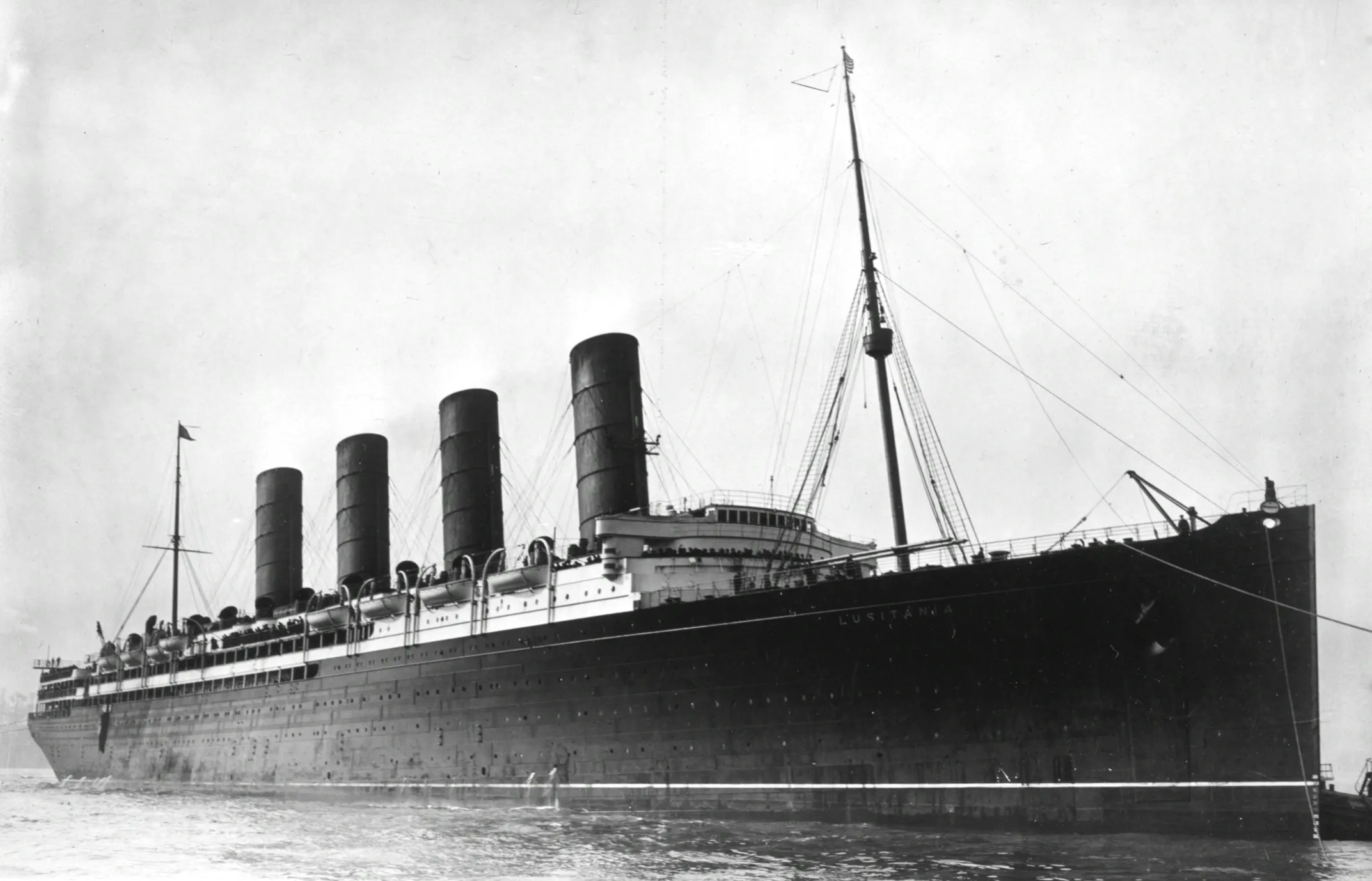
The Lusitania Memorial Week is one of the most important commemorative traditions of the Historic Ships Network. Each May, the entire alliance of channels, pages, and communities turns its attention to RMS Lusitania — a ship whose sudden loss in 1915 shocked the world and altered the course of the First World War.
Since 2016, this memorial has been held every year without interruption. What began as a focused week of posts has grown into a carefully crafted, multi-platform commemoration spanning five social networks — reaching a combined audience of more than 5.5 million people across its editions.
This year, the Network also presents special store items dedicated to the 111th anniversary — available exclusively through the HSN Memorial Store during Memorial Week.
Since 2016
Where It All Began
In May 2016, the Historic Ships Network began its first Lusitania Memorial Week — bringing the same rigorous, minute-by-minute commemorative approach used for the Titanic memorial to a tragedy equally devastating and far less remembered than it deserves to be.
The Lusitania was not sunk by accident or by the sea. She was deliberately targeted and torpedoed by German submarine U-20 on the afternoon of May 7, 1915 — in broad daylight, just 11 miles off the Irish coast. She sank in 18 minutes. Of the 1,959 people aboard, 1,198 perished, including 128 American citizens whose deaths would, years later, help draw the United States into the war.
The memorial was established to ensure this story — and these lives — receive the sustained, annual recognition they have long deserved.
"The Lusitania is one of history's most consequential shipwrecks — and one of the least commemorated at scale. We set out to change that. Every year, without exception."
May 7, 1915
The Afternoon We Never Forget
Unlike the Titanic, the Lusitania was lost not in the deep of night, but in bright afternoon. The attack lasted seconds. The sinking lasted 18 minutes. These are the moments the Network commemorates every year.
German submarine U-20, under Kapitänleutnant Walther Schwieger, spots RMS Lusitania approaching off the Old Head of Kinsale on the southern coast of Ireland. The ship is making 18 knots and sailing in clear visibility.
A single torpedo strikes the starboard side below the bridge. Seconds later, a second, far larger explosion rips through the bow — the cause of which remains debated to this day. The ship immediately begins to list severely to starboard.
The severe list makes launching lifeboats from the port side nearly impossible. Panic spreads across the decks. In the eighteen minutes that follow, only a fraction of the 48 lifeboats are successfully launched. Passengers cling to wreckage as the bow plunges beneath the surface.
Eighteen minutes after the torpedo struck, RMS Lusitania slips beneath the Atlantic. Of 1,959 aboard, only 761 survive. 1,198 lives are lost — among them 128 Americans. The sinking will be cited as a catalyst for the United States' eventual entry into the First World War.
Local fishing vessels, trawlers, and eventually naval ships reach the scene. Survivors are pulled from the water and taken to Queenstown (now Cobh) in County Cork, Ireland. Rescue operations continue through the night. The world awakens the following morning to headlines of horror.
"She did not sink in the dark, in the silence of the deep ocean. She was taken — in daylight, in eighteen minutes, in full sight of land. We remember that."
— Historic Ships Network · Lusitania Memorial Week
This Year's Memorial
Special Items in the Store
In honour of the 111th anniversary of the sinking of RMS Lusitania, the HSN Memorial Store has released a dedicated collection of items for this year's Memorial Week. From prints to wearables — each piece is a tribute to those lost on May 7, 1915.
By supporting the Historic Ships Network, you help keep this tradition alive — and ensure that the Lusitania, and the 1,198 lives lost with her, are never forgotten.