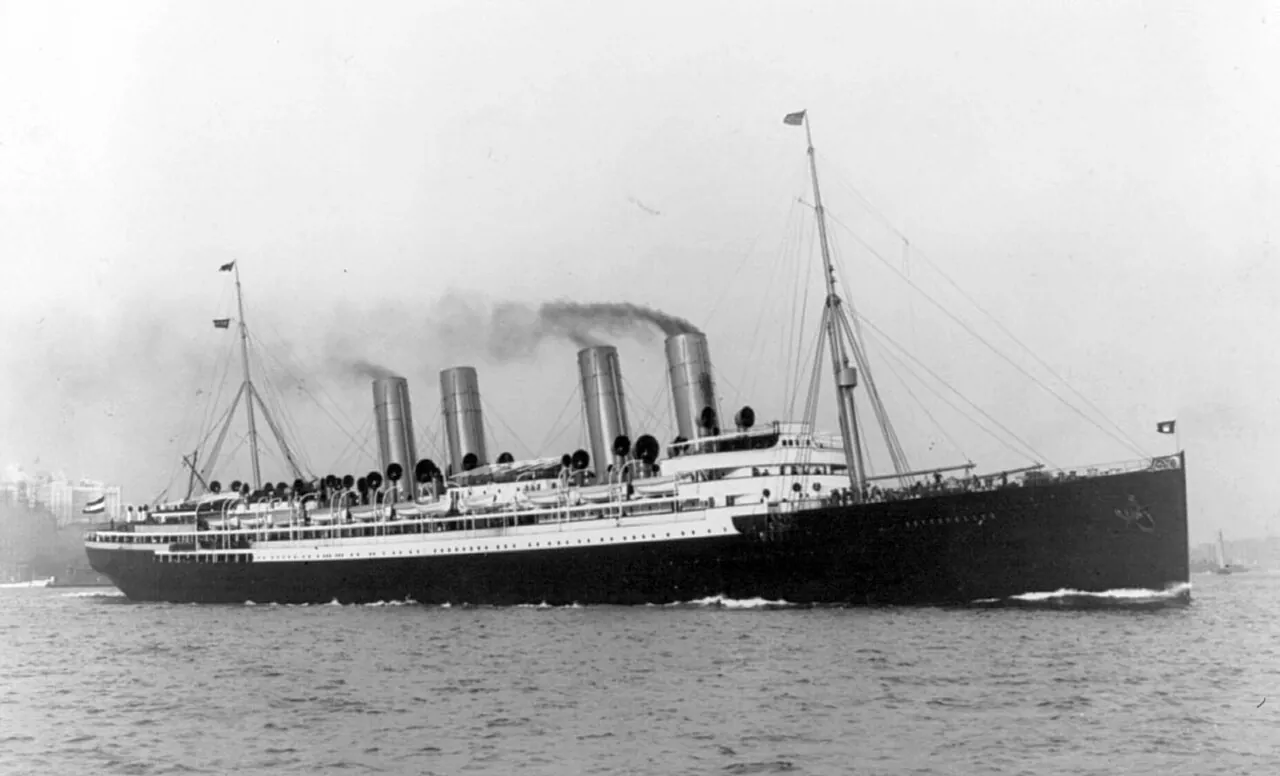
Hamburg America Line
SS Deutschland
German passenger ship
History
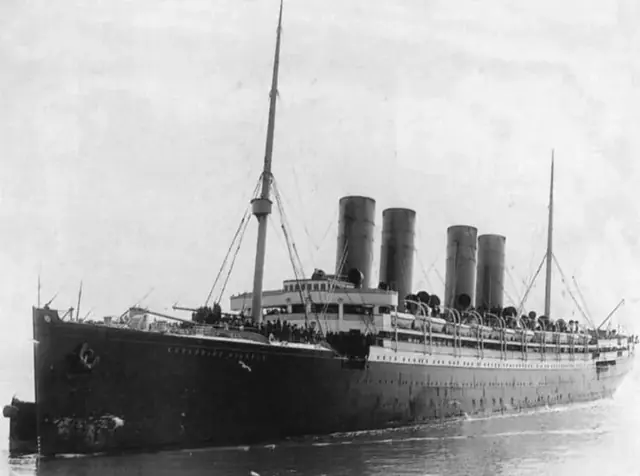
SS Deutschland was a passenger liner built in Stettin and launched on 10 January 1900 for the Hamburg America Line (HAPAG) of Germany. She was officially the second ocean liner to have four funnels on the transatlantic route, the first being SS Kaiser Wilhelm der Grosse of 1897.
The Deutschland took away the Blue Riband from the Kaiser Wilhelm der Grosse on her maiden voyage and held the west-bound record for over seven years, until Cunard took it back to Britain with the RMS Lusitania in 1907. Despite holding the record she suffered from persistent vibrations, especially in the stern area which gave her the nickname "The Cocktail Shaker" and made her unpopular with 1st class passengers.
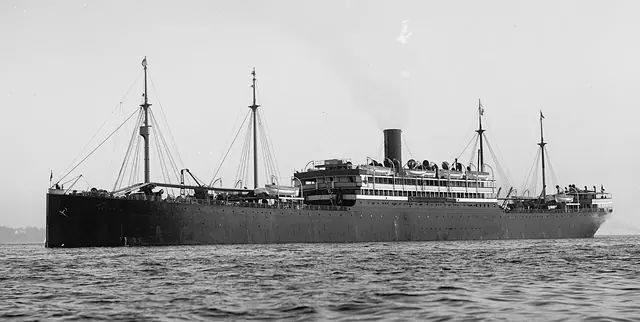
Although her vibration problems were finally fixed around 1907, it was already too late, as she has lost the speed record to Cunard, and the direct competition had grander, larger and safer ships, so in 1910 she was pulled from the transatlantic route and refitted into the world's second fully dedicated cruise liner. As Victoria Luise she was enormously popular with the travelling public, and as she was about to start her third around-the-world cruise World War I broke out and she was requisitioned as an auxiliary cruiser.
However, because of her conversion into a cruise ship, her engines were throttled to a maximum speed of 17 knots. And after a fire that broke out during her conversion into a cruiser, it was decided to abandon the preparations, and she was left standing at her pier till the end of World War I.
Text: Wikipedia — SS Deutschland (1900), CC BY-SA 4.0
Further Reading
Ship Facts & Specifications
Also Known As
- 1900–1910: Deutschland
- 1910–1920: Viktoria Luise
- 1920–1925: Hansa